

Temporary strainers protect pumps, valves, meters, and other critical equipment during piping system commissioning, flushing, and initial startup. They capture debris such as weld slag, rust, scale, gasket material, and construction particles before these contaminants reach sensitive downstream equipment.
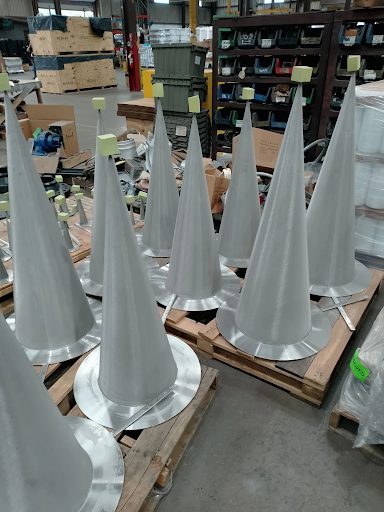
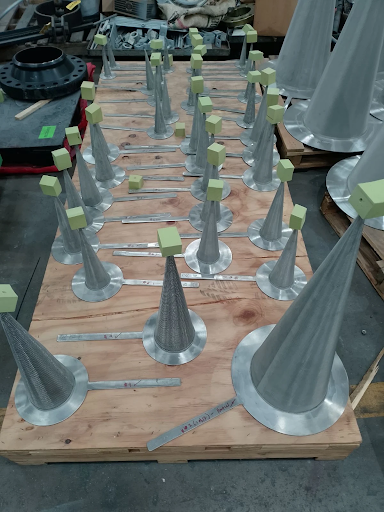
Conical Temporary Strainers
Why Are Temporary Strainers Important?
Newly fabricated or modified piping systems can contain residual construction debris even after cleaning and flushing. If this material reaches a pump or control valve, it can cause clogging, erosion, seal damage, or unexpected equipment downtime.
Temporary strainers provide the first line of protection during startup. They are typically installed upstream of critical equipment and removed after the piping system has been adequately cleaned and the risk of contamination has been reduced.
Depending on the application, temporary strainers may be supplied as:
- Conical or “witch-hat” strainers – commonly used for pump suction and high-flow applications
- Basket strainers – suitable where greater debris-holding capacity and convenient cleaning are required
- Plate strainers – compact designs for installations where space is limited
Selection of opening size, open area, material, pressure rating, and flow requirements determines pressure drop and debris capture performance.
Applications
Temporary strainers are commonly used in:
- Oil & gas and petrochemical facilities
- Refineries and process plants
- Water and wastewater systems
- Power generation facilities
- Chemical processing plants
- Pipeline commissioning and flushing projects
Industry guidance also emphasizes installing removable strainers in pump suction piping during flushing and initial operation, with the design allowing removal without disturbing pump alignment.
Specification Inputs for a Custom Strainer
Sweco specializes in custom-fabricated piping components and manufactures conical strainers, truncated (basket) strainers, and perforated plates.
For a custom temporary strainer, we work from project-specific requirements such as:
- Pipe size and flange rating
- Material of construction
- Required perforation or mesh size
- Flow rate and allowable pressure drop
- Strainer orientation and installation arrangement
- Piping and equipment connection requirements
Protect Your Equipment Before Startup
A properly specified temporary strainer protects equipment during commissioning and system startup. Correct design and fabrication selection reduces contamination-related failures, maintenance, and unplanned downtime.
Sweco can assist with custom temporary strainer fabrication for your specific piping requirements. Contact us to request a quotation, or schedule a call with an engineer to discuss your application.